

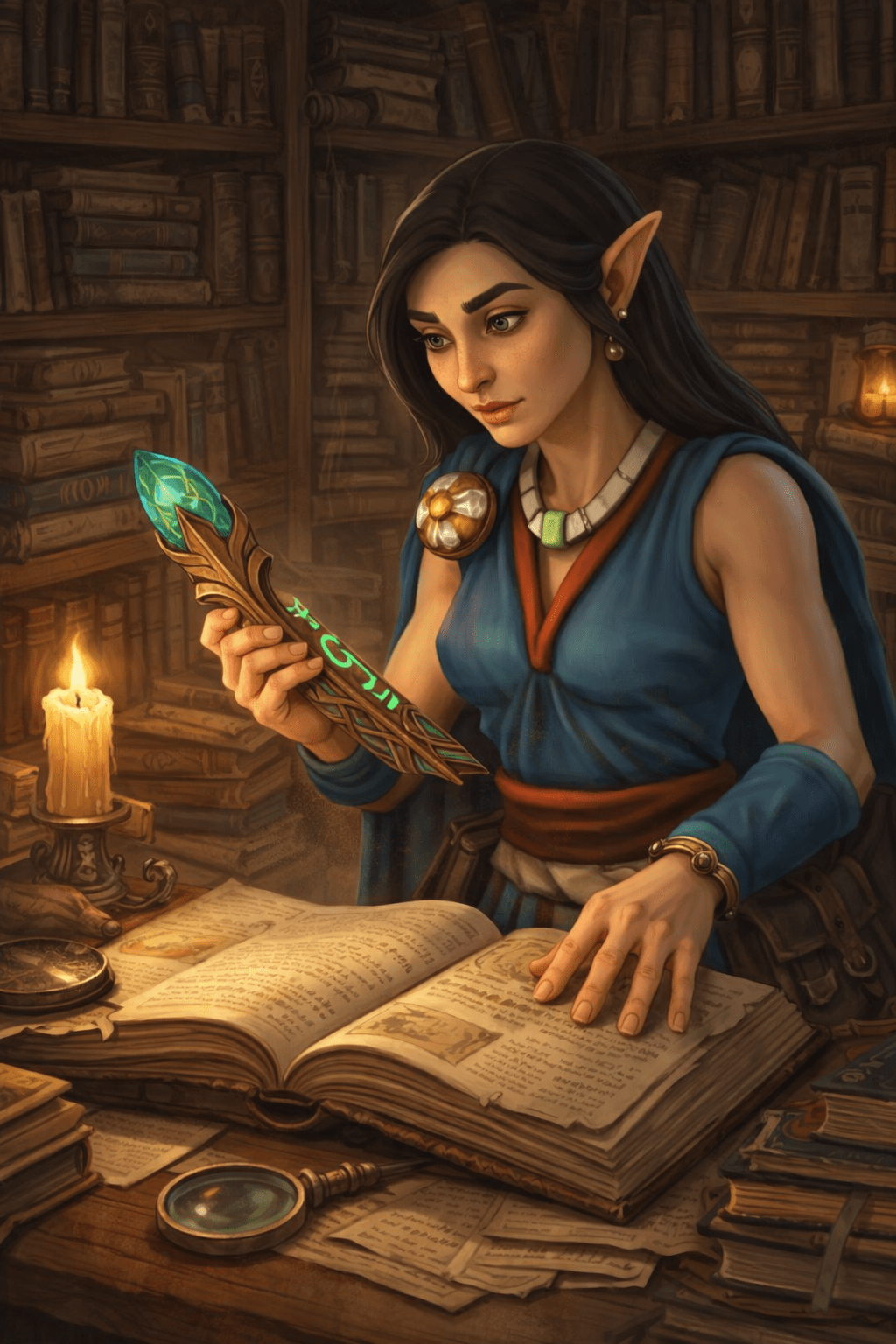
Baeliya Tomewarden arrived in Talagaad as few of her kind ever did—not as a princess or emissary, but as a bearer of books, scrolls, and the quiet authority of memory. She came in the company of Engelbert Shaumer, her worldly possessions ferried from distant Ulthuann and the alabaster heights of Saphery, where the Tower of Hoeth loomed like a defiant thought against the sky. Within that tower, Baeliya had served as an archivist, a journeyman in the care of the greatest accumulation of knowledge the world had ever known. The Tower of Hoeth was more than a library—it was a ward against annihilation, a fortress of law raised to hold back chaos with ink, sigil, and disciplined will, its lower masters guarding secrets older than the human calendar and deadlier than any blade.
From this crucible, Baeliya was dispatched by Dorandral Emberfall, a lower master of renown and a mage of the High Court, with a charge both clear and severe: knowledge must be gathered wherever it yet hides. Through Engelbert Shaumer’s regular trade runs, Baeliya bartered quietly with loggers, merchants, and any who would deal with her, seeking fragments of wood-elf lore and relics to be prized loose from the deep forests. Such knowledge was never freely given—the Asrai hoarded their secrets with a ferocity born of long memory and older grudges, and so the work was done obliquely, piece by piece, through coin, favor, and patience.
Talagaad did not welcome her. High elves were rare in such places, and rarity bred suspicion. Doors closed, conversations ended when she approached, and eyes lingered too long on her bearing, her accent, her unhuman poise. For a time, Baeliya found herself adrift, her mission stalled by cold stares and muttered superstition. It was Pushka, a dwarf merchant, who at last opened a door to her, offering shelter where others would not—a gesture of weight in the old world.
Yet even as she set herself to her work, not all was well within Baeliya Tomewarden. Elves lived for millennia, and though no mind could retain every moment of so vast a life, their memories were famously deep, ordered, and enduring. Among archivists, that gift was not merely a talent but a sacred trust. It was therefore a quiet horror to Baeliya that certain events from the near past refused to settle in her mind—moments blurred, details slipped, and the absences were small but wrong. She did not speak of this, not even in the privacy of her thoughts, for to acknowledge such a failing would be to admit a fracture where none should exist.
There were other signs. Dogs bared their teeth and growled as she passed, horses shied and rolled their eyes, their flesh uneasy in her presence. And sometimes, when she caught her reflection unguarded, the face in the glass seemed to wear a knowing smirk that she did not feel upon her own lips. Among the high elves, the taint of chaos was not merely feared—it was abhorred. In the Tower of Hoeth, where forbidden knowledge was locked away precisely because it tempted even the disciplined, such corruption was a constant, silent concern.
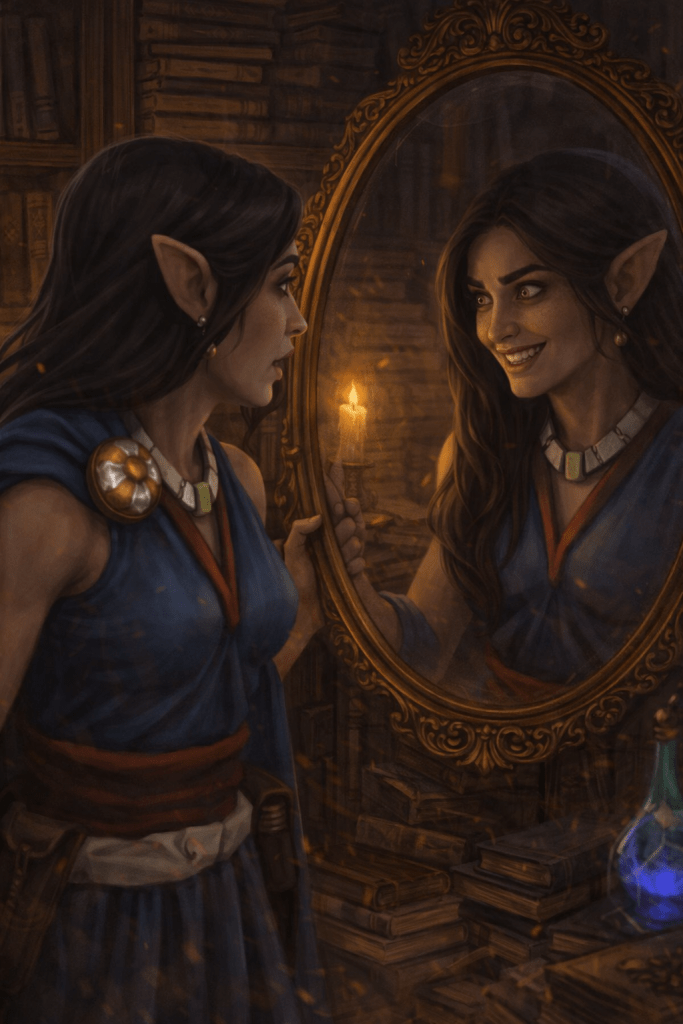
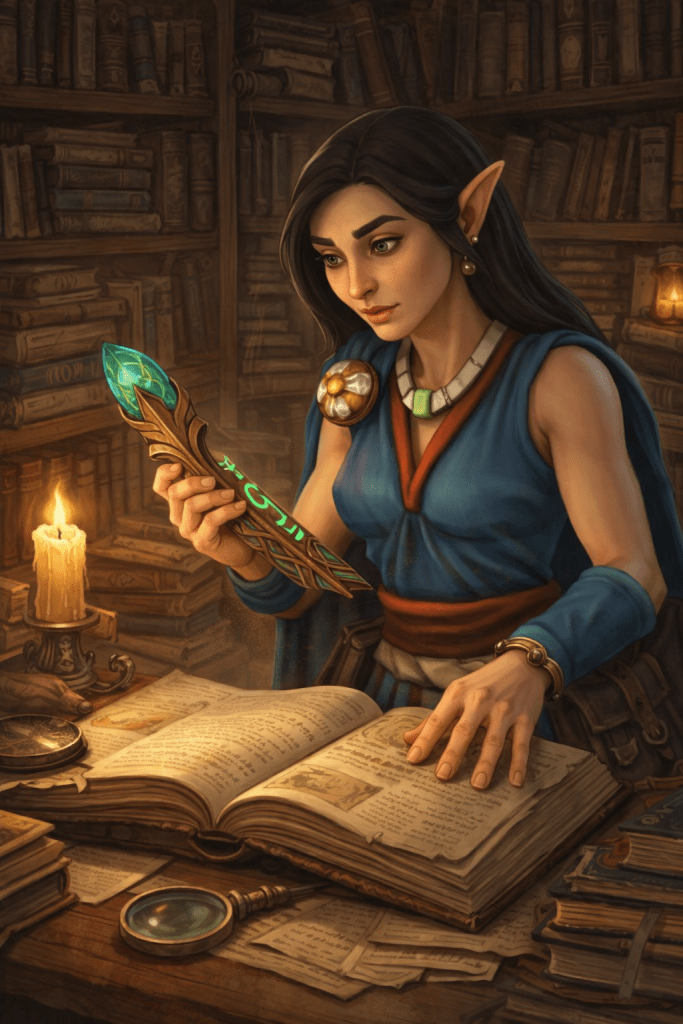
Baeliya handled catalogues and prepared the shipment of wood-elf relics with ritual care—gloves, wards, meticulous notation—every precaution she knew. The objects were drawn from the same shadowed forests that birthed twisted beast men, and the worry gnawed at her. The winds of magic did not merely shape the world; they shaped those who studied them. Baeliya’s immersion in their inner workings was no idle scholarly pursuit—it was armor forged of understanding, a means of shielding her mind and soul from forces that she sensed pressing closer, though their nature remained elusive. Whether she was mastering the winds to defend herself, or merely teaching them how better to reach her, was a question she refused to ask. For now, the books were ordered, the relics were packed, the work continued, and the mirror kept its counsel.
 Tales of Urchin Keep
Leave a comment